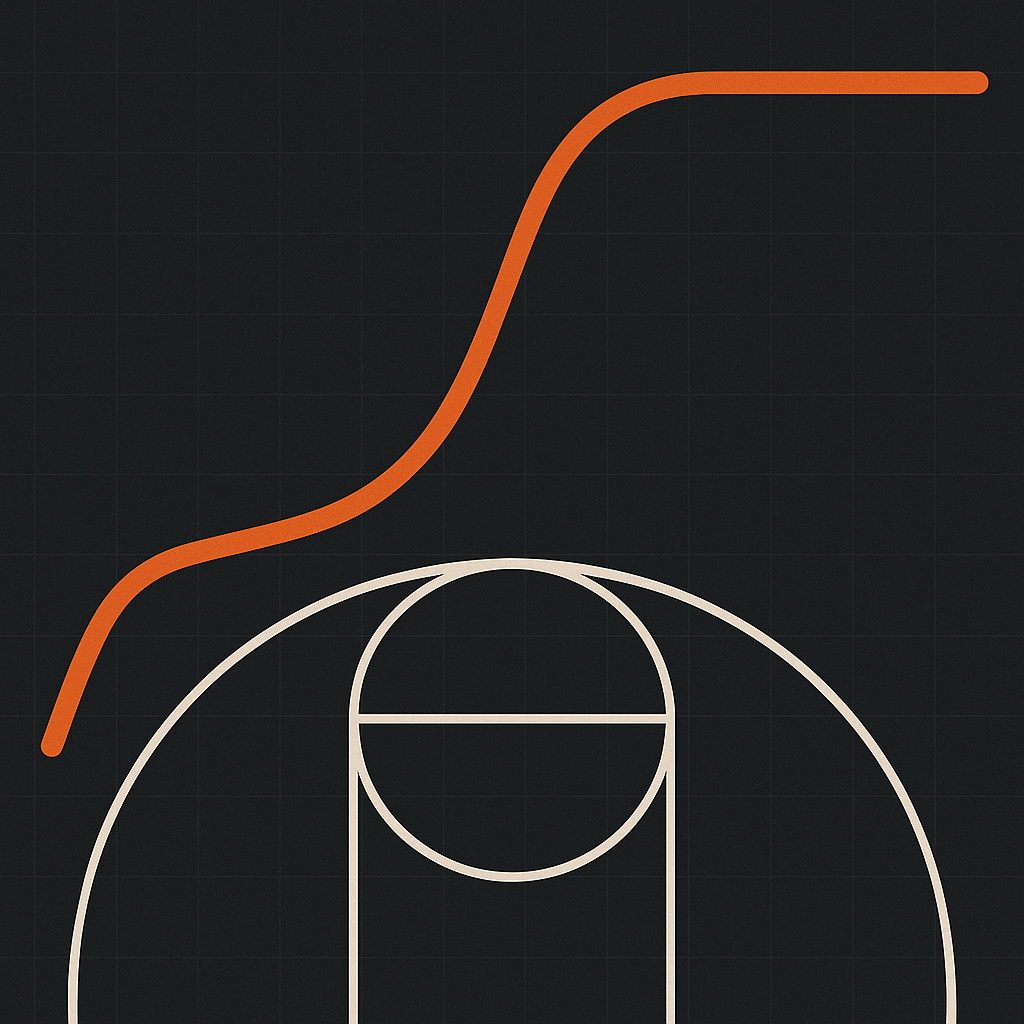
Every revolution has an inflection point. For the NBA’s three-point era, that moment might be now.
The Plateau
After a decade of relentless growth — from 22.4 three-point attempts per game in 2014-15 to a peak of 35.8 in 2024-25 — the league has essentially flatlined. This season’s 35.2 attempts per game represents the first meaningful decline in ten years.
It’s not a dramatic drop. But in a league that had been adding roughly 1.5 three-point attempts per team per season like clockwork, any regression is noteworthy.
Why the Stall?
Three converging factors:
1. Defensive adaptation. Teams have gotten dramatically better at contesting threes. The league-wide contested three-point rate has risen from 58% to 67% over the past three seasons. Defenses are conceding twos at the rim to take away threes — a strategic inversion of the Moreyball philosophy that started this revolution.
2. Mid-range resurrection. The “dead zone” isn’t dead anymore. Mid-range attempts are up 8% this season, driven by players like Shai Gilgeous-Alexander and Kevin Durant who can generate efficient looks from 15-19 feet. The math has shifted — a contested three at 34% isn’t clearly better than an open mid-range two at 48%.
3. Roster construction limits. Not every team can field five capable three-point shooters for 48 minutes. The talent pool for elite shooting has been stretched thin by every team chasing the same archetype.
The Counter-Revolution Teams
A handful of teams are actively swimming against the current. The most interesting case is Oklahoma City, which ranks just 22nd in three-point attempts but 3rd in offensive rating. Their formula — elite mid-range creation, transition offense, and free throws — looks like a blueprint from 2014 running on 2026 talent.
The three-point revolution wasn’t wrong. It was just incomplete. The next evolution isn’t about shooting more threes or fewer — it’s about shot quality over shot selection ideology.
What Comes Next
The most likely outcome isn’t a retreat from the three-point line — it’s a refinement. Teams will still shoot threes, but the emphasis will shift from volume to quality. The days of “any open three is a good shot” are fading. The next era will be defined by teams that can generate both efficient threes and efficient twos.
The Bottom Line
The three-point revolution changed basketball permanently. But the data suggests we’ve reached equilibrium — a point where defenses have adapted enough to neutralize pure volume shooting. The teams that win the next decade won’t be the ones that shoot the most threes. They’ll be the ones with the offensive versatility to attack wherever the defense gives them space.
The revolution isn’t over. It’s evolving.